 |
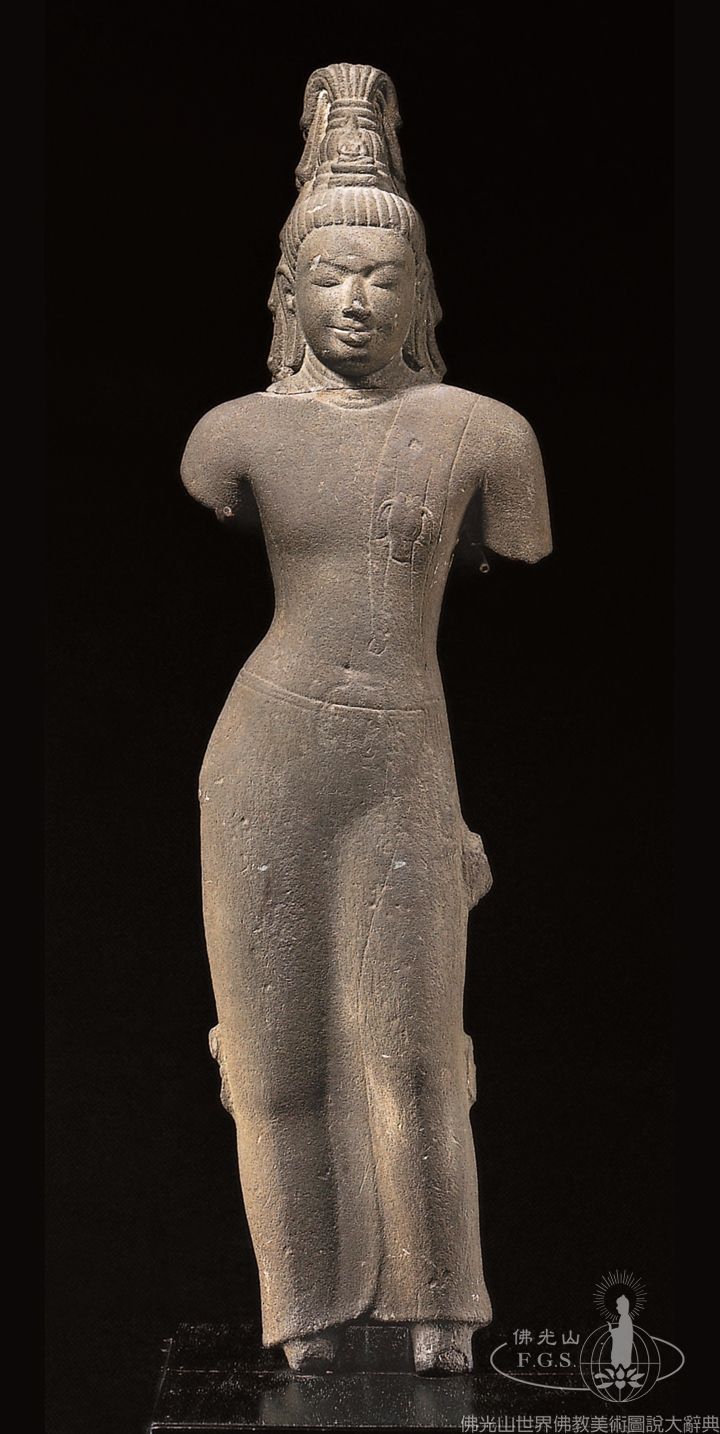
Wat Sala Thung: Avalokitesvara Bodhisattva
|
| |
|
Wat Sala Thung: Avalokitesvara Bodhisattva
THAILAND, Surat Thani; 7th–8th century; Sandstone; H: 55 cm; Bangkok National Museum, Thailand
The statue was discovered at Wat Sala Thung, in southern Thailand. The number of Avalokitesvara statues found in southern Thailand provides evidence of the spread of Mahayana Buddhism under the influence of the Srivijaya Empire (circa 7th–13th century). Most of these statues have a well-rounded body, graceful curves, and are crowned with the image of a Buddha. The close fitting robes and stance show Indian influence from the Gupta (circa 320–550) and Pala (circa 8th–12th century) periods.
The Buddha image fronts the Bodhisattva 's high and elaborately dressed topknot with more long hair falling down the back. Across the torso, the figure wears a hide with an antelope head still attached. The long skirt hugs the shape of the legs, where the left is advanced, while the weight of the body on the other displaces the hip sinuously to the left. |