 |
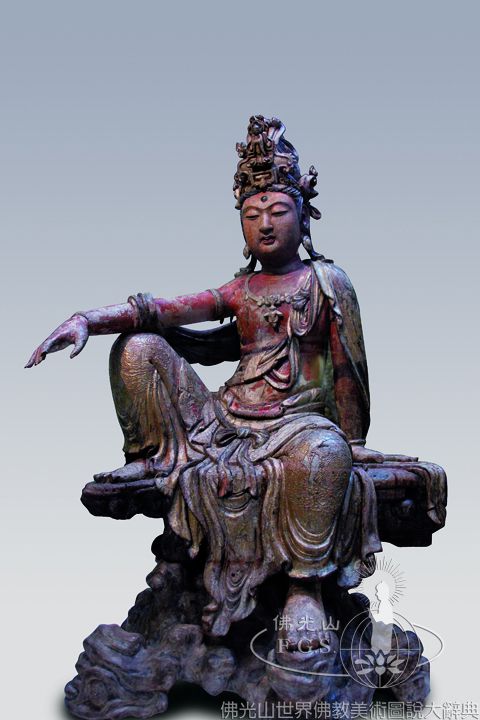
Water-Moon Avalokitesvara
|
| |
|
Water-Moon Avalokitesvara
CHINA; Jin dynasty (1115–1234); Wood with lacquer and gilding; H: 114.2 cm; Victoria and Albert Museum, London, United Kingdom
Research has revealed that three layers of paint have been applied to this statue over the course of the statue 's history. When it was originally completed in the Jin dynasty (1115–1234), the hair was blue, the upper body green, the skirt red, and the headdress and jewelry were painted gold. During the Ming dynasty (1368–1644), this was replaced by a layer of gilt. The right arm and left feet have been repaired, while the rocky platform was discovered to have been added later. A niche of some sort was believed to have backed the statue, while research into the material indicates that it comes from Shanxi and was mostly likely enshrined in a temple.
The Bodhisattva is seated on a rocky platform in a variation of the relaxation posture. An elaborate crown fronted by a Buddha encircles a high topknot, from which tresses of hair fall to the shoulders. The right hand is stretched over the knee while the other hand supports the body 's weight. A necklace with a pendant decorates the chest while stoles drape haphazardly over the upper body. The skirt outlines the shape of the legs and cascades over the rocky seat. |