|
Mogao Cave 17: Lotus Sutra
|
| |
 |
Mogao Cave 17: Lotus Sutra
|
| |
 |
Mogao Cave 17: Lotus Sutra
|
| |
 |
Mogao Cave 17: Lotus Sutra
|
| |
 |
Mogao Cave 17: Lotus Sutra
|
| |
 |
Mogao Cave 17: Lotus Sutra
|
| |
 |
Mogao Cave 17: Lotus Sutra
|
| |
 |
Mogao Cave 17: Lotus Sutra
|
| |
|
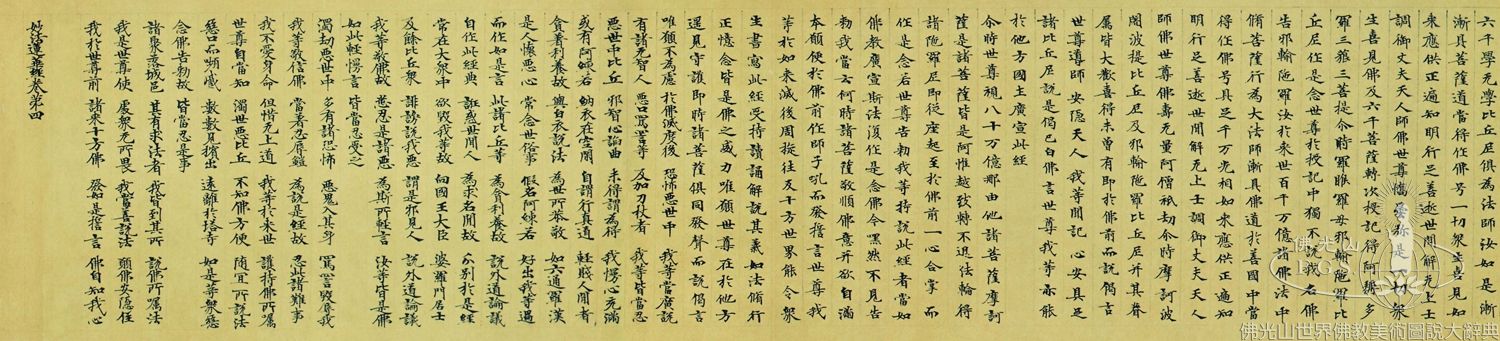
Mogao Cave 17: Lotus Sutra
CHINA, Gansu, Dunhuang; Tang dynasty (618–907); Regular script; Handscroll; Ink on hemp paper; 23 x 618 cm; Zhejiang Provincial Museum, Hangzhou, China
This scroll, written with text from the Lotus Sutra, was unearthed from Mogao Cave 17 in Dunhuang. The Lotus Sutra is typically found in a seven or eight fascicle format containing 28 chapters. It was a widely circulated sutra throughout history, and its core teaching—the singular, undivided nature of the three vehicles—is presented in verses, parables, and metaphorical literature. A preface at the start of the scroll entitled Notes on the Sutra Repository of the Dunhuang Caves was written by Chen Jikan in cursive script and narrates the unearthing, circulation, and loss of the Dunhuang sutra manuscripts. Chen determinedly collected manuscripts of good quality and wrote commentaries directly on the works to provide later viewers with an understanding of the backgrounds and histories of the artifacts.
In his notations, Chen refers to this scroll as a work of stiff |