 |
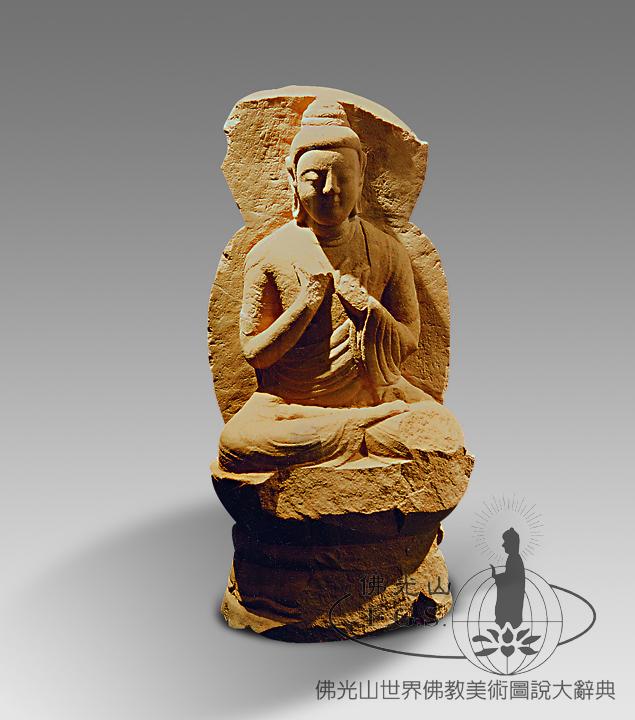
Dali: Seated Buddha
|
| |
|
Dali: Seated Buddha
CHINA, Yunnan, Dali; Nanzhao Kingdom (752–902); Yellow sandstone; H: 62 cm; Weishan County Administration Office of Cultural Heritage, Dali, Yunnan, China
The statue was discovered in 1990 at a temple site in Tushan, Dali. Tushan is an area rich with Buddhist culture and where more than 280 artifacts were also unearthed. Many of the artifacts were made from local material. The statue is believed to have been created in the 8th century.
The Buddha is seated in full lotus position. The usnisa is shaped like a spiral shell. Other Buddha characteristics include elongated earlobes and the three lines on the neck. The monastic robe leaves the right shoulder bare, and the arms are raised in a position that suggests that the hands were probably in a Dharmacakra (Dharma wheel) mudra. An armlet is visible near the elbow, which is uncommon on Buddhas but its presence could be due to the influence of Vajrayana Buddhism that was introduced into the area during the Tang dynasty (618-907). The nimbus and aureoles are both plain and unadorned. This and the style of the robe suggest a Gandharan influence. |