 |
Xianyan Temple Huiguang Pagoda: Lotus Sutra
|
| |
 |
Xianyan Temple Huiguang Pagoda: Lotus Sutra
|
| |
 |
Xianyan Temple Huiguang Pagoda: Lotus Sutra
|
| |
|
Xianyan Temple Huiguang Pagoda: Lotus Sutra
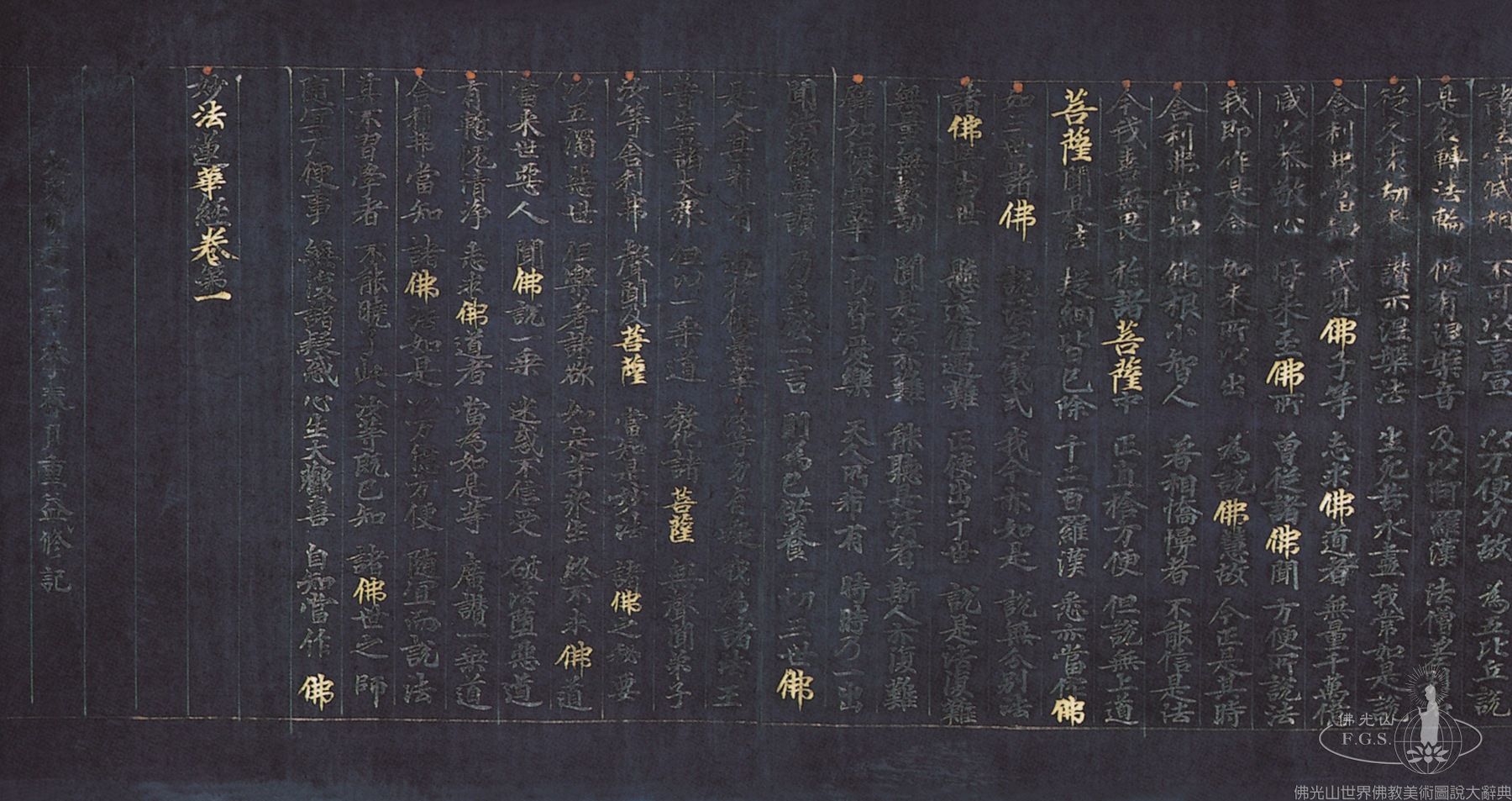
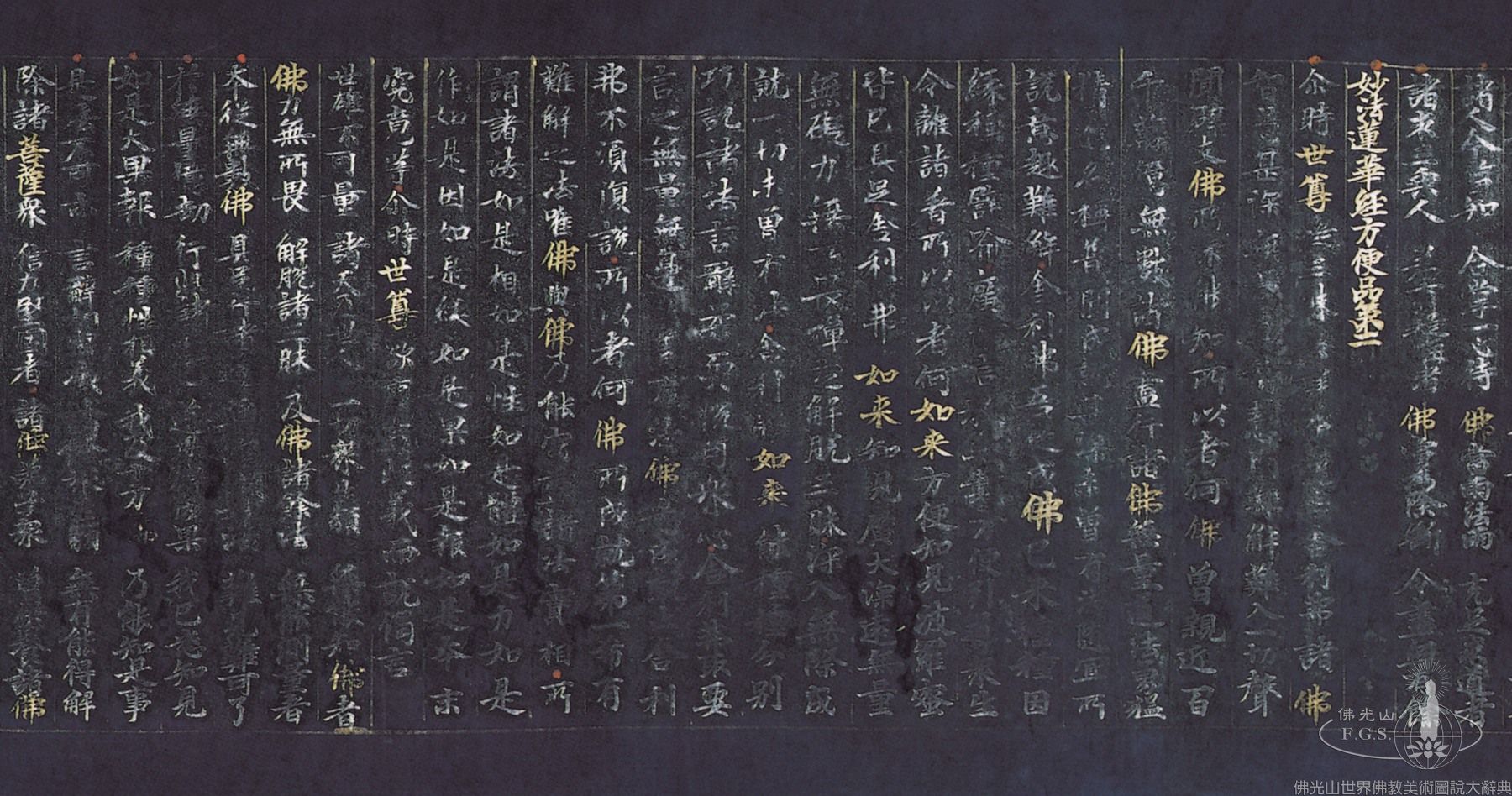
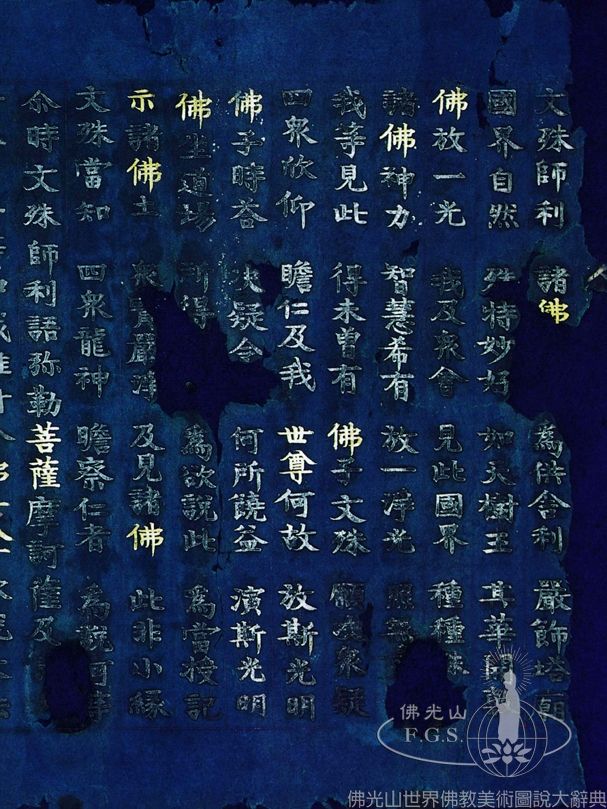
CHINA, Zhejiang, Rui'an; Five Dynasties to Northern Song dynasty (907–1127); Regular script; Handscroll; Gold and silver on paper; 30.2 x 683 cm; Zhejiang Provincial Museum, Hangzhou, China
This sutra manuscript was discovered in 1966 at Huiguang Pagoda at Xianyan Temple in Zhejiang. It contains 386 lines of text from the Lotus Sutra, with each line comprising 17 characters. A postscript to the scroll indicates that the work was produced in 1033. Apart from the use of a neat regular script as an expression of reverence, the scroll was also written with gold and silver pigmented paste for a dignified and unique effect. Silver ink was used for most of the manuscript except for the names of the Buddhas and Bodhisattvas, which were written in gold. This element was similarly implemented in the title of the sutra, in which the gold was applied to specific characters only.
Characters appear wider than they are tall. They are laid out within a fanciful clerical script composition. Writing speed and corresponding stroke texture are downplayed. Every stroke is cautiously yet firmly written in a monumental style, and the characters appear to be artfully refined. This is an aesthetic treatment often found on famous steles, a style that articulates a sense of ceremoniousness. |