 |
Pudu Temple
|
| |
 |
Pudu Temple
|
| |
|
Pudu Temple
CHINA, Beijing
Pudu means Universal Deliverance. According to a record, it was constructed in the Yuan dynasty (1271–1368) with a statue of Maitreya Buddha enshrined in the main hall. There is no firm evidence to confirm this assertion; however, it is known that it was an imperial palace during the Ming dynasty (1368–1644). In 1694 during the Qing dynasty, a temple dedicated to Mahakala, a Dharma protector, was built on the northern part of the site. In 1775 it was expanded and renamed Pudu Temple. It was listed as a Municipal Cultural Heritage Site in 1984.
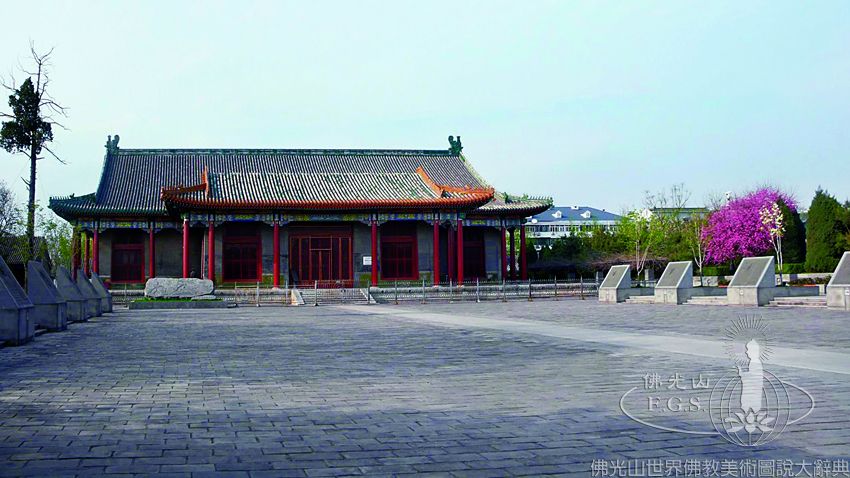
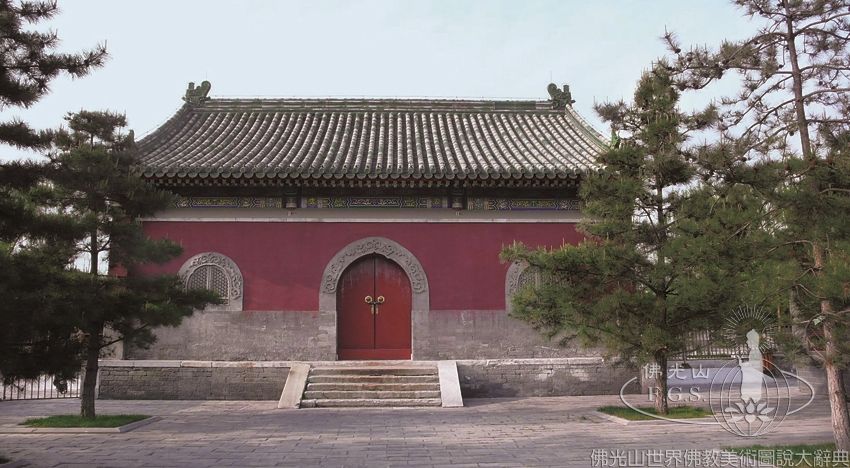
The extant buildings are the main temple gate and main hall, which were reconstructed on the original foundations between 2002 and 2003. The three-bay wide main temple gate has a flush gable roof covered in green glazed tiles. The doorway and windows on the side are framed by decorated stone arches. The seven-by-three bay main hall is called Ciji (Kind Liberation) Hall. It has a single-eave hip-and-gable roof. A veranda surrounds the whole building. At the front there is a three-by-one bay portico with a hip-and-gable roof. |