 |
Udayana Buddha
|
| |
|
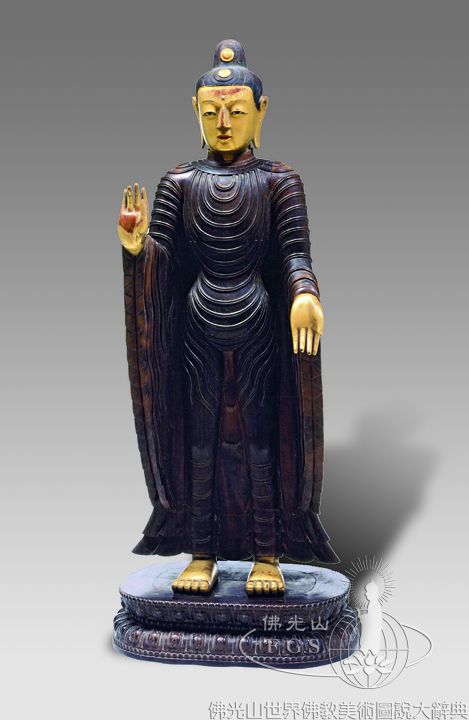
Udayana Buddha
CHINA; Qing dynasty (1644–1911); Red sandalwood; H: 135 cm; Palace Museum, Beijing, China
The Udayana Buddha statue is the earliest Buddha image created. The ones from China existed in two forms. The first style was popular in the Luoyang area during the Tang dynasty (618–907), in which the Buddha sits with legs pendent and wears a robe across the left shoulder. The second style was popular after the Song dynasty (960–1279), where the Buddha wears a robe with dense, rippling folds. The second style originated from the legend in which the Buddha was requested to stand beside the water, and his image was painted based on the rippling reflection of him in the water.
The Buddha wears a robe covering both shoulders and concentric folds rippling down the chest. The hands are held in abhaya (fearlessness) and varada (wish-granting) mudras. The figure stands on the large surface of the lotus pod. |