 |
Yakushiji Temple Golden Hall: Medicine Buddha Triad
|
| |
 |
Yakushiji Temple Golden Hall: Medicine Buddha Triad
|
| |
 |
Yakushiji Temple Golden Hall: Medicine Buddha Triad
|
| |
 |
Yakushiji Temple Golden Hall: Medicine Buddha Triad
|
| |
 |
Yakushiji Temple Golden Hall: Medicine Buddha Triad
|
| |
|
Yakushiji Temple Golden Hall: Medicine Buddha Triad
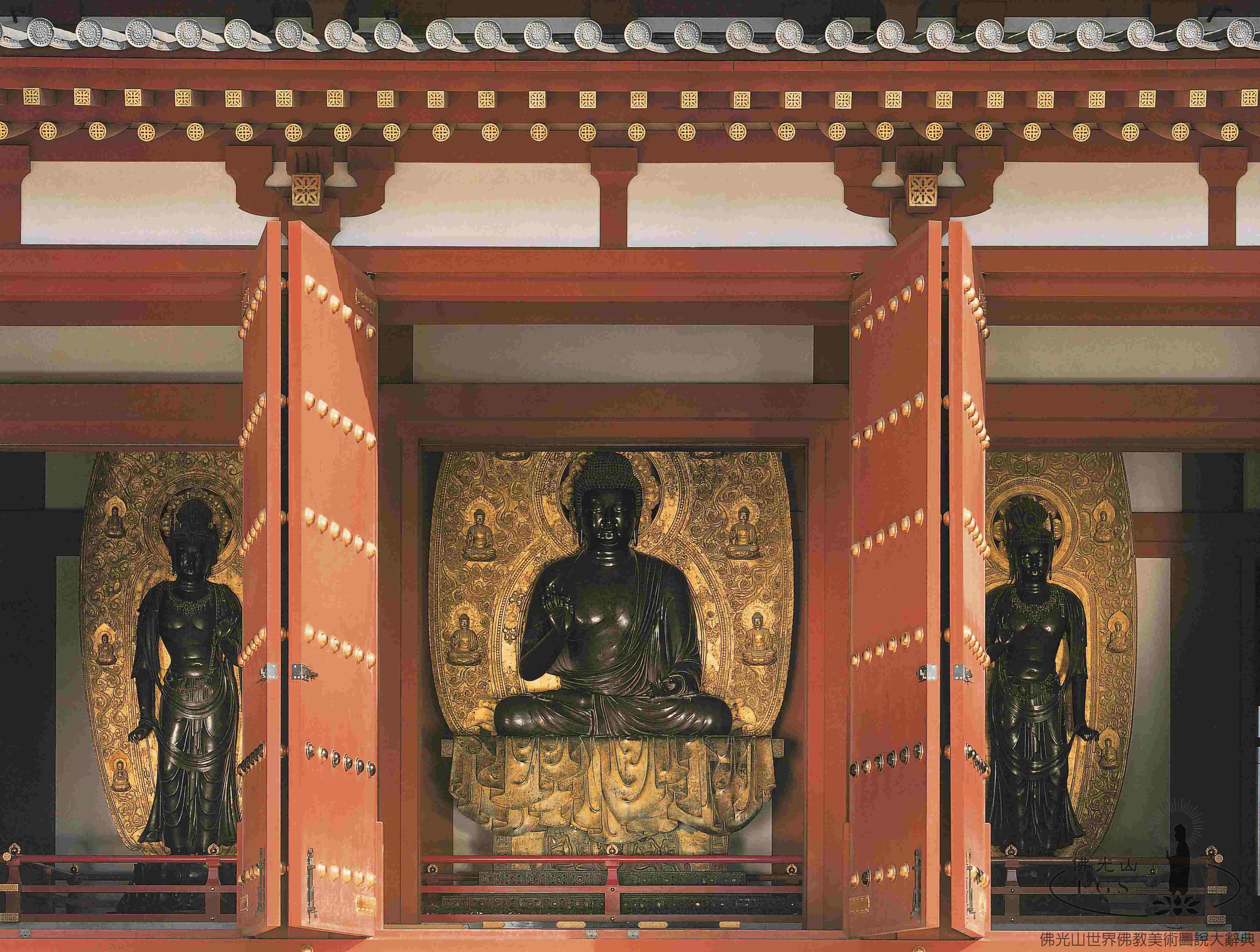
JAPAN, Nara; Asuka to Nara period (538–794); Gilt copper alloy
This set of figures was cast between the 7th and 8th centuries using the lost-wax method. The sculptures were recognized as National Treasures in 1951.
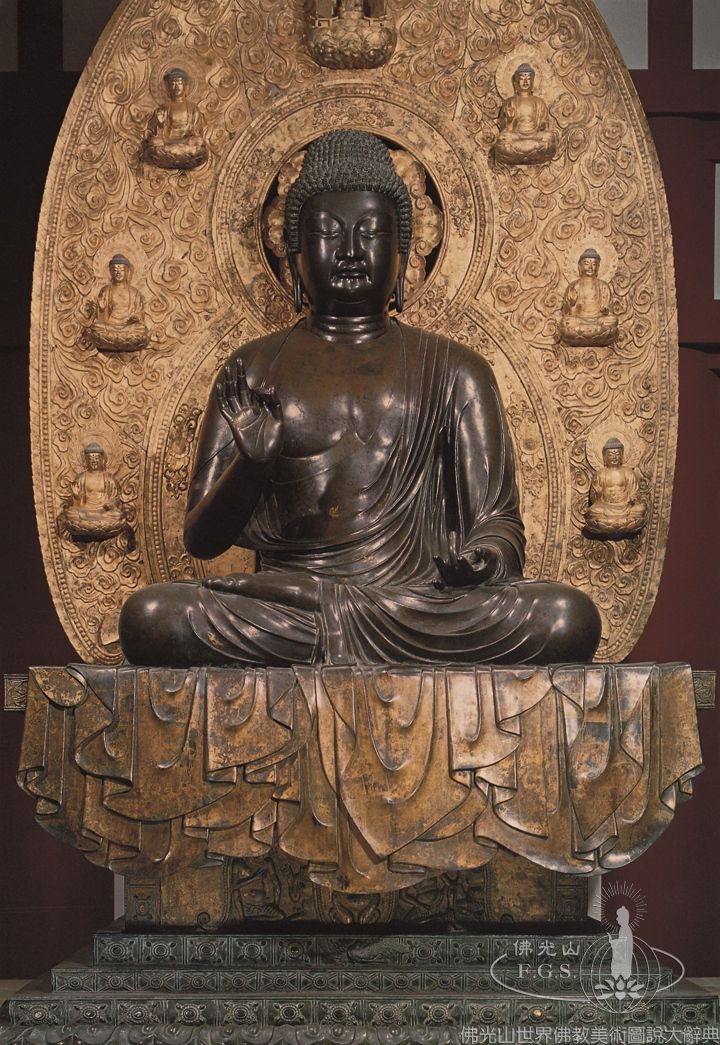
The Medicine Buddha sits cross-legged in full lotus position on a Sumeru throne. The right hand forms the vitarka (teaching) mudra, while the left hand is placed in the lap with fingers curved slightly inwards. It may indicate that the hand originally held this Buddha 's usual attribute of a jar of medicine, missing here but present in other statues of him in the temple. A Dharma wheel and other auspicious signs can be found on the sole of the figure 's left foot, while a swastika is visible on the chest. The fingers are webbed, one of the thirty-two physical characteristics of a Buddha. The cloth on which the Buddha sits overhangs the throne and its folds are treated in a striking stylized manner.
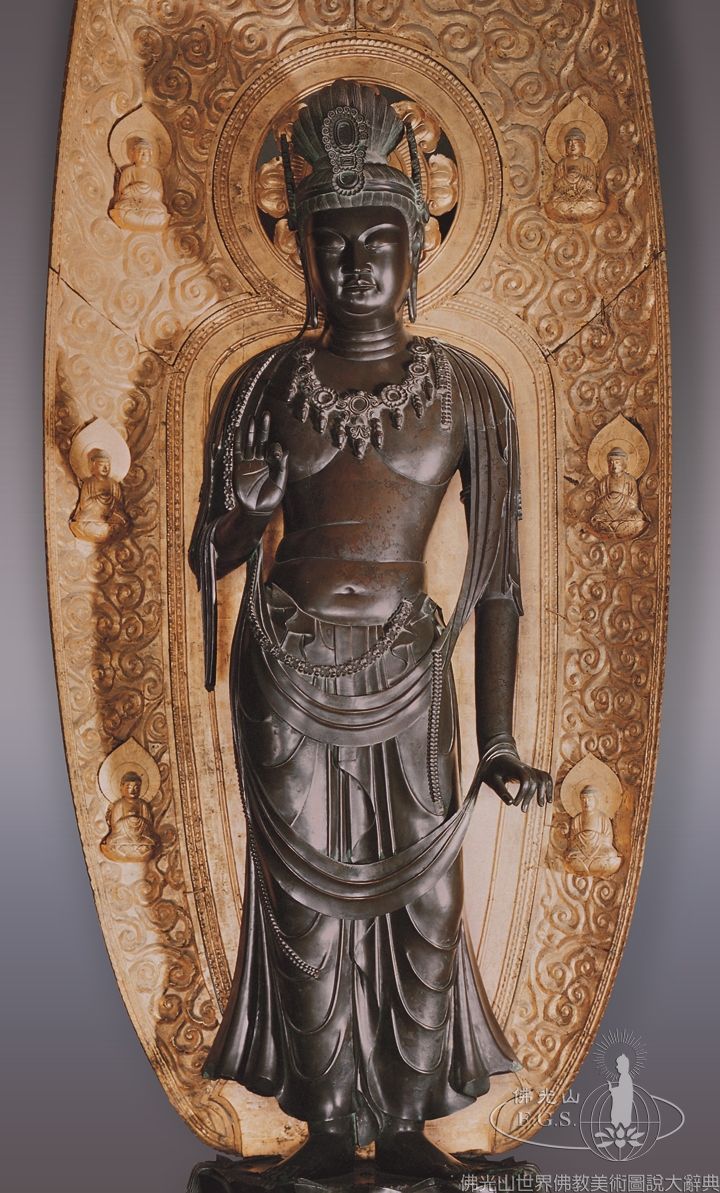
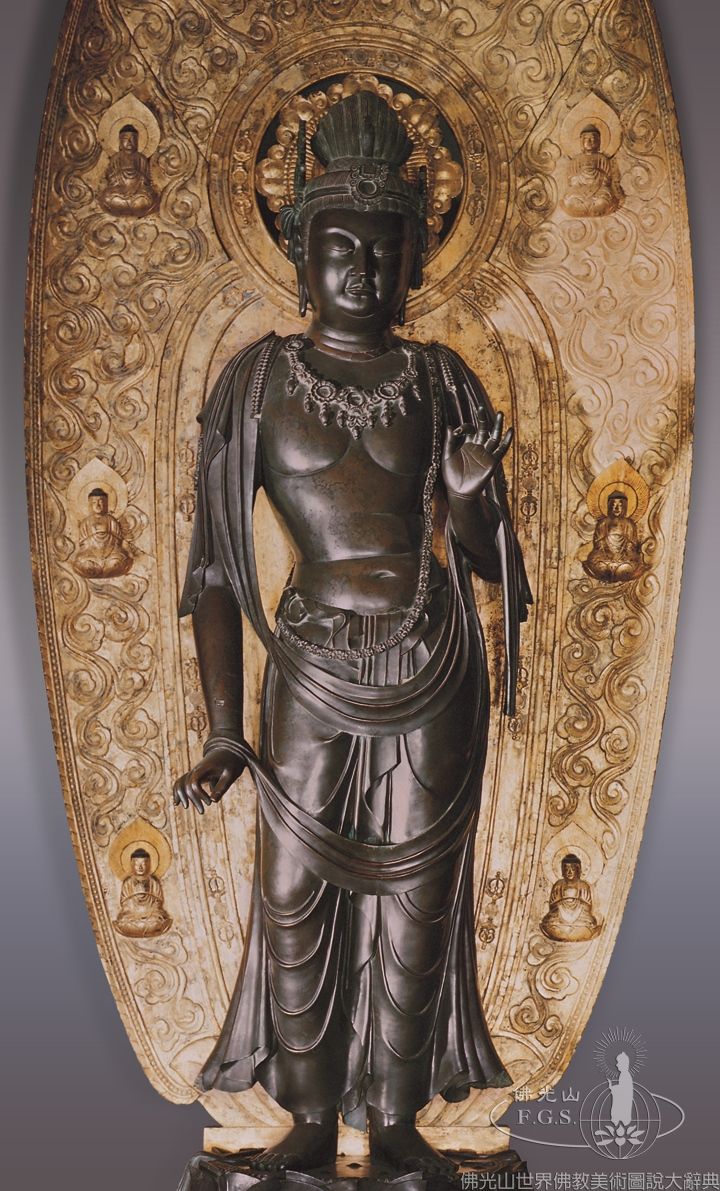
The two attendants on either side are the Suryaprabha and Candraprabha Bodhisattvas, standing on lotus supports and posed symmetrically in the tribhanga posture. Suryaprabha has the right hand raised in the vitarka mudra and the left hand held at the side in the same mudra, while Candraprabha is in mirror image. They are clad in diaphanous clinging garments wound by a stole that falls from their shoulders. Overall, statues are relatively similar in scale and style, yet each is independent in its rendition. The wooden mandorlas were added later during the Edo period (1615–1868). The mandorla behind the Medicine Buddha shows seven miniature manifestations of himself, while the figures around the Bodhisattvas are in different positions.
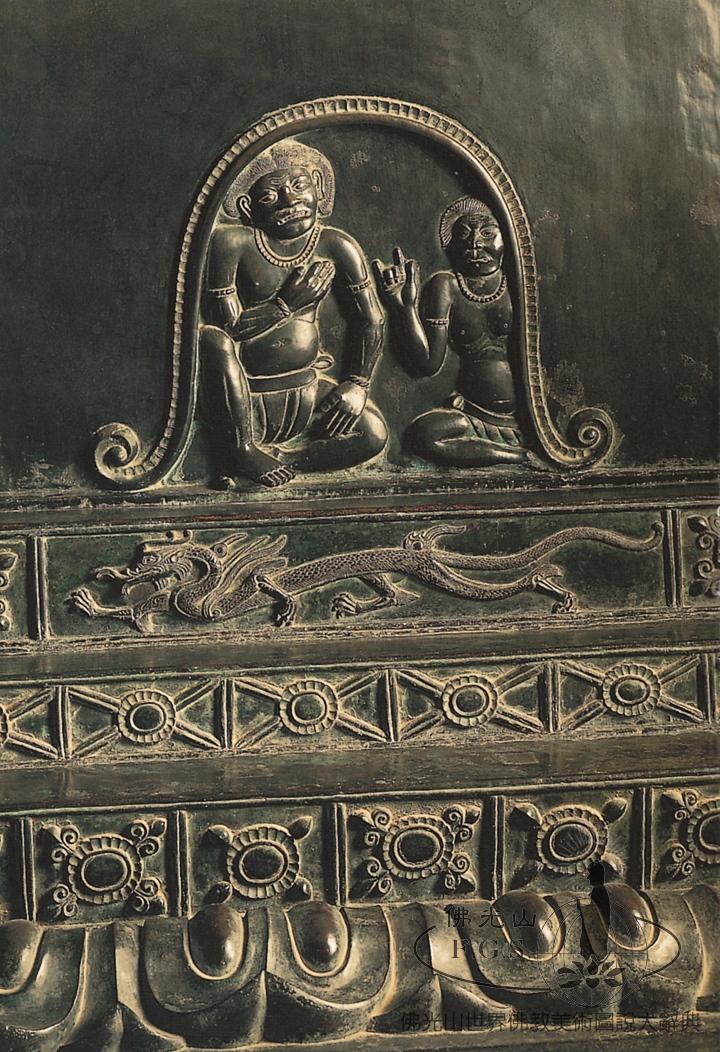
The carvings found on the body of the Buddha 's throne are noteworthy. Apart from the Persian-style grape-vines, the reliefs of the semi-naked humans have a Central Asian tone. The four animals at the base, namely the dragon, tiger, tortoise and phoenix, are an obvious influence from China. The style of the statues were influenced by the Tang dynasty (618–907) of China. |